
Wood is one of the most versatile and durable materials used in construction, but its performance largely depends on its moisture content. When wood has not been properly dried, it can suffer from warping, cracking, fungal growth, and even structural instability.
In tropical regions such as southeastern Mexico, where humidity levels are high for much of the year, industrial wood drying becomes essential to ensure stable and long-lasting wood products.
Proper drying is a critical step in delivering high-quality wood suitable for demanding construction and architectural projects.
What Happens When Wood Contains Too Much Moisture?
Wood is a hygroscopic material, meaning it naturally absorbs and releases moisture from the surrounding environment. When wood is used with excessive moisture levels, several issues may occur:
-
warping and twisting
-
fungal growth and mold
-
cracking during natural drying
-
reduced structural stability
According to wood technology specialists, controlling the moisture content of wood is essential to ensure dimensional stability and prevent failures in construction projects.
The Importance of Drying Wood Before Use
Before wood can be used in construction, carpentry, or outdoor projects, it must reach an appropriate moisture level depending on the environment where it will be installed.
Typical moisture ranges include:
-
Interior applications: 8% – 12% moisture content
-
Exterior applications: 12% – 16% moisture content
If wood is installed with higher moisture levels, it will continue drying after installation, which can cause movement, deformation, and structural problems.
What Is Industrial Wood Drying?
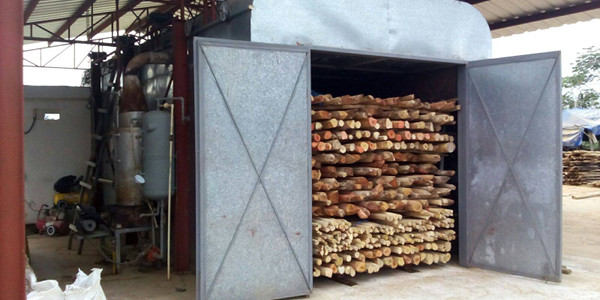
Industrial wood drying is performed in specialized kilns that control temperature, airflow, and humidity to gradually remove moisture from the wood.
Unlike air drying, this controlled process allows for:
-
precise moisture control
-
reduced risk of warping
-
elimination of organisms that damage wood
-
improved structural stability for construction use
Kiln drying is widely used in the modern wood industry to ensure consistent product quality and performance.
Benefits of Industrial Wood Drying in Construction Projects
Properly dried wood offers several advantages for architectural, residential, and tourism-related projects.
Improved structural stability
It significantly reduces the risk of warping or movement after installation.
Increased durability
Dry wood is less vulnerable to fungi and insects.
Better treatment absorption
Properly dried wood allows preservatives and protective treatments to penetrate more effectively.
Higher material quality
This is particularly important in projects located in humid or coastal environments.
Why Drying Is Especially Important in Tropical Climates
In regions like the Yucatán Peninsula, where environmental humidity can remain high throughout the year, industrial kiln drying ensures wood is properly prepared for construction use.
This process is particularly important for structures such as:
-
decks
-
pergolas
-
palapas
-
docks and piers
-
exterior facades
By controlling moisture content, these structures can maintain their stability and durability for many years.
Conclusion
Industrial wood drying is a fundamental process for ensuring the stability, strength, and durability of wood products. Proper moisture control helps prevent warping, fungal growth, and premature deterioration.
In humid or tropical climates, using properly kiln-dried wood is an investment that guarantees safer, longer-lasting, and higher-quality structures.
